
How Much Does a Fence or Deck Cost in Calgary in 2026
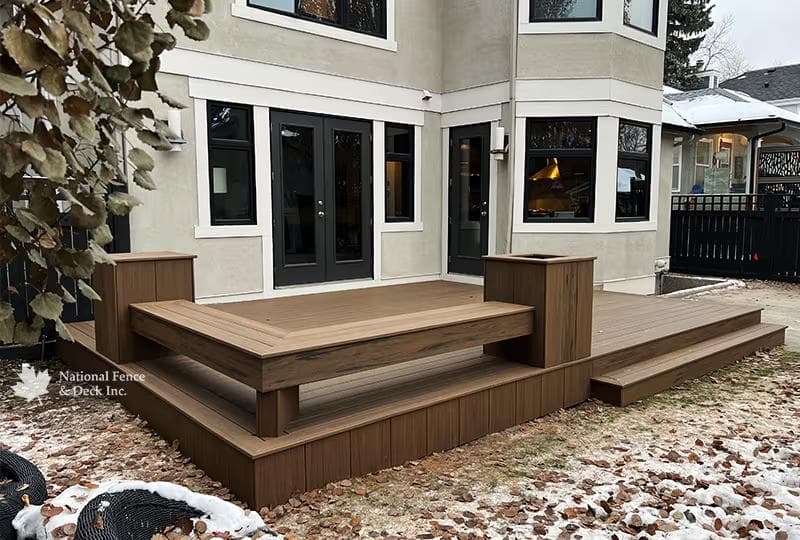
How Much Does a Fence or Deck Cost in Calgary in 2026
If you’re thinking about building a new fence or deck, the first question is usually the same:
What’s this actually going to cost me?
Fair question. And honestly, most websites dance around it.
The truth is, fence and deck pricing in Calgary can vary a lot depending on the materials, site conditions, design, access, and finishing details. But that does not mean homeowners should be left guessing.
This guide breaks down what actually drives cost, what realistic price ranges look like in 2026, and why one quote can come in way lower than another.
The honest answer
There is no universal flat rate.
A small, simple pressure-treated project on easy ground is one thing. A large composite deck with stairs, aluminum railing, skirting, tear-out, and tricky access is a completely different animal.
That said, Calgary-area pricing signals in 2026 point to these rough starting ranges:
- Wood fence material pricing is often cited around $15 to $30 per linear foot before labor and extras, while vinyl is often cited around $25 to $40 per linear foot. Labor commonly represents a major share of total project cost.
- Some Calgary contractors quote installed wood fencing much higher, with examples around $55 per linear foot for a 4-foot pressure-treated fence, $65 per linear foot for a 6-foot pressure-treated fence, and cedar fences around $80+ per linear foot depending on post size and design. Other Calgary installers quote broader installed fence ranges of roughly $70 to $120+ per linear foot depending on material, height, and site conditions.
- For decks, Calgary and Canadian 2026 pricing references commonly put pressure-treated wood decks around $25 to $30 per square foot installed, while composite decks often land around $35 to $65 per square foot installed depending on structure, railing, stairs, and finish level.
So if you just want the plain-English version:
- Basic wood fences are usually the most budget-friendly option
- Cedar and vinyl fences cost more
- Composite decks cost quite a bit more up front than pressure-treated decks
- Details and site conditions can swing your quote hard
That’s the real story.
Fence pricing in Calgary: what actually affects the cost
A fence quote is not just “price per foot.” Anyone selling it that way without context is oversimplifying the job.
1. Material choice
This is the obvious one, but it matters more than most people think.
A basic pressure-treated fence will usually be your entry-level option. Cedar generally costs more but offers a nicer finished look. Vinyl can reduce maintenance, but the upfront price is usually higher than wood. Calgary pricing examples from local sources show everything from lower material-only ranges to installed fence prices that can land much higher once labor, posts, gates, and site complexity are added.
2. Fence height
A 4-foot fence is not a 6-foot fence.
More material, bigger visual impact, more wind load, and often heavier posts and construction requirements. That’s part of why local examples show 6-foot pressure-treated fencing costing more per linear foot than 4-foot versions.
3. Linear footage
This seems obvious, but there’s nuance.
A 120-foot project and a 30-foot project do not price the same on a per-foot basis every time. Smaller jobs can carry proportionally higher setup and mobilization costs. Larger jobs can sometimes spread fixed costs out better.
4. Posts and structural choices
This is one of the biggest quote separators.
Post size, post spacing, whether posts are sunk in concrete, and whether the builder is using pressure-treated or upgraded post options all affect both cost and longevity. Cheap quotes often get cheap here.
5. Gates
Gates are never “just a gate.”
Single gate, double gate, hardware quality, frame strength, width, latch style, alignment, and how it ties into the fence all affect price. If you have a wide gate for RV access or equipment access, expect the number to jump.
6. Slope and terrain
Flat lot? Easier.
Sloped yard, awkward grading, retaining edges, roots, old concrete, tight side-yard access? Now the crew is working harder and slower. That shows up in the quote.
7. Tear-out and disposal
If an old fence needs to come out first, that is not free.
Demo, haul-away, disposal fees, and cleanup all add cost. A lot of homeowners forget to ask whether this is included, then wonder why the final number climbed.
Deck pricing in Calgary: what drives the number
Decks vary even more than fences.
You are not just building a platform. You’re building structure, usability, safety, finish, appearance, and often a major part of the backyard experience.
1. Size
The larger the deck, the higher the price. Simple enough.
But price does not increase only because of more decking boards. Bigger decks often mean more framing, more footings, more labor, more railing, and more finishing details.
2. Material: pressure-treated vs composite
This is the biggest pricing fork in the road.
Pressure-treated wood is usually the cheapest way to build a deck up front. Composite costs more but typically offers lower maintenance and longer-term durability. Current Canadian pricing references for 2026 commonly place pressure-treated decks around $25 to $30 per square foot installed and composite around $35 to $65 per square foot installed.
That gap is real.
For homeowners, the real question is not just “what costs less today?” It’s also:
- Do you want to stain and maintain it?
- Do you care about long-term appearance?
- Is this a starter-home budget build or a premium backyard upgrade?
3. Height and footings
A low deck is simpler than a raised deck.
Once height increases, structure becomes more involved. Footings matter more, stairs become more likely, guards and railings become necessary, and the whole job gets more technical. Canadian guidance also notes the importance of proper frost-depth planning for footings in this climate.
4. Railings
This is another huge cost driver people underestimate.
Basic pressure-treated railing is one price. Aluminum railing is another. Glass railing is another universe.
You can make a deck look dramatically more premium with railing choices, but you will absolutely feel it in the quote.
5. Stairs
Stairs are labor-heavy and detail-heavy.
More framing, more cuts, more finishing, more complexity. One set of stairs can move the price meaningfully.
6. Skirting and finishing
A lot of cheaper quotes look fine at first glance because they leave out the stuff that makes the deck actually look finished.
Skirting, fascia, trim detailing, picture framing, lighting, upgraded stair treatments, and underside finishing all add cost. They also add polish.
7. Tear-out and replacement
Replacing an old deck is different from building a new one in open space.
Demo, disposal, hauling material out, protecting the surrounding yard, and dealing with surprises under the existing structure all add time and money.
Real-world ballpark examples
These are not fixed quotes. They are simple examples to help people think in the right range.
Basic pressure-treated fence
A straightforward pressure-treated backyard fence on an average lot may be one of the lower-cost fence options, but installed Calgary examples still commonly land well above raw material pricing once labor, posts, and gates are included. Local contractor examples show installed pressure-treated wood fencing around $55 to $65 per linear foot for standard heights, with broader market examples ranging higher depending on design and complexity.
Cedar privacy fence
A cedar fence usually costs more than pressure-treated. Local Calgary examples place some cedar fence builds closer to $80+ per linear foot depending on post size and finish level.
Small pressure-treated deck
A smaller ground-level or low-height pressure-treated deck may fall near the lower end of the installed range, often around the general $25 to $30 per square foot benchmark before you start stacking on premium railing, skirting, or major stair work.
Composite deck with railing
A composite deck with upgraded finish details can move quickly into premium territory. Canadian 2026 references commonly place composite around $35 to $65 per square foot installed, and larger or more detailed builds can go well beyond that.
Why one quote can be way cheaper than another
This is where homeowners get burned.
Sometimes a lower quote is just better efficiency. But a lot of the time, it means something is missing.
Here are the usual reasons:
Materials are not apples-to-apples
Not all wood is equal. Not all composite lines are equal. Not all posts, fasteners, gates, and railing systems are equal.
Structural standards differ
Some quotes are light on post size, framing, footing depth, hardware, or reinforcement.
Finishing details are excluded
One quote includes cleanup, demo, trim, gates, fascia, and haul-away. Another quote quietly leaves them out.
Labor quality is different
Good crews cost more than cheap crews. That’s life.
Warranty and workmanship vary
A cheap quote is not automatically a deal. Sometimes it is just the down payment on a future headache.
Do you need a permit for a deck in Calgary?
Sometimes, yes.
The City of Calgary states that for uncovered decks, a building permit is required if the deck is higher than 0.6 m (2 feet) above grade at any point in certain scenarios, including replacing, rebuilding, or extending an existing deck, or replacing structural components. The City also provides updated 2026 permit checklists and deck application requirements.
Also important: if the deck does not meet Land Use Bylaw requirements, a development permit may be required before the building permit.
This is one reason homeowners should not treat deck quotes like commodity pricing. Code, elevation, setbacks, and permit requirements can change the job.
What homeowners should budget for beyond the main build
People often budget for the fence or deck itself and forget the extras:
- demolition and disposal
- gates
- stairs
- railing upgrades
- skirting
- stain or sealing
- permit-related requirements
- grading or minor site prep
- repair work discovered during replacement
That is usually where “surprise” costs come from.
So what should you expect in 2026?
Here’s the straight answer.
If you want the cheapest route, stick to simple design, easy access, pressure-treated materials, and minimal extras.
If you want a backyard that looks premium, lasts longer, and needs less maintenance, expect to spend more up front.
There is no magic around that. Better materials and more detail cost more.
But the cheapest quote is rarely the smartest quote.
A fence or deck is outside all year, in Calgary weather, taking sun, moisture, freeze-thaw cycles, and movement. This is not the place to cut every corner and hope for the best.
Our advice before getting quotes
Before you request pricing, have at least a rough answer to these:
- What material do you want?
- Are you okay with maintenance?
- Do you need privacy, curb appeal, or both?
- Is this a budget build or a long-term upgrade?
- Do you want basic function or finished detail?
The clearer you are, the better the quote will be.
Final word
If you’re trying to price a fence or deck in Calgary, do not rely on one generic number you saw online.
Use ranges as a starting point. Then look at the real drivers:
- material
- size
- height
- site conditions
- gates or stairs
- railing
- demolition
- finish level
That is what determines the real cost.
And if two quotes are wildly different, do not just ask, “Why is this one cheaper?”
Ask, “What’s missing?”
Get a real quote for your project
Every yard is different. Every layout is different. Every homeowner wants something a little different.
If you want a realistic price for your fence or deck project, the fastest way is to get a proper quote based on your actual site, measurements, material choice, and scope.
Contact NFDINC for a quote, and we’ll give you a straight answer based on the project you actually want built.